
Curriculum

Old Paris / New Europe: Dance Dramaturgy & Costume Design
Course #: L29 360 09
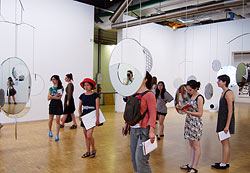
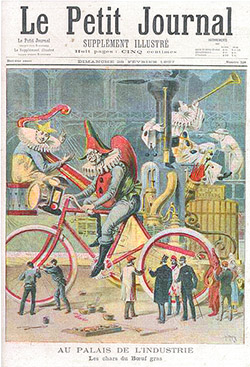
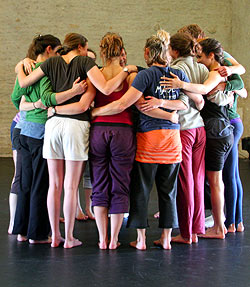
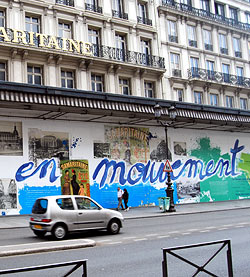
While staying at The Loft in Belleville, participants get a taste of the artist's life in Paris. Working together as an ensemble, students will be introduced to the city's rich artistic history as well as the world of contemporary movement arts in Europe through a course in dance dramaturgy called Old Paris/New Europe.
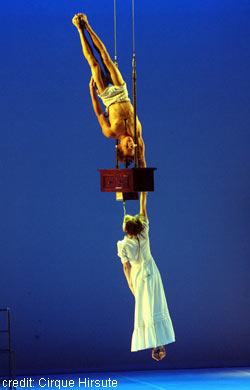
Dance and Costume Design is our research theme for 2014, with particular attention being given to the question of patterns and how we use patterns in both choreography and costume design.
 Daily studio classes and discussion seminars are led by WashU faculty and researchers from the École des Hautes Études en Sciences Sociales in Paris (EHESS). During free time, students are also encouraged
to explore independently the dance technique classes offered by European choreographers at various dance studios in walking distance from the hostel.
Daily studio classes and discussion seminars are led by WashU faculty and researchers from the École des Hautes Études en Sciences Sociales in Paris (EHESS). During free time, students are also encouraged
to explore independently the dance technique classes offered by European choreographers at various dance studios in walking distance from the hostel.
In preparation for the second course that takes place in Normandy, students will document their dramaturgical research in this initial step of the creative process. During a three-week residency in the studios of Le Tapis Vert, Normandy, students will deepen their own practice in choreography, costume design and performance. For more about this second part of the program, see: Choreography & Construction Collaborations.
Choreography & Construction Collaborations
Course #: L29 361 09
Working with Bonnie Kruger from Washington University, as well as European artists in residence at Le Tapis Vert in Normandie, students will deepen their exploration of the choreographic process with site-specific and studio work as well as costume construction assignments. Taking advantage of the rural setting, we will explore the nature, history and culture of the region..
Ideas will be introduced and developed through a collaborative process of research and creation founded on the principle of cultural exchange and experiment. We will deepen our research and put it into concrete use by constructing costumes and proposing choreography that explores the use as well as stretches the limits of how to use patterns in our creative work. Regular showings will give students opportunities to witness one another's process, to give and receive feedback and to exchange ideas while also learning about the links between costume and performance.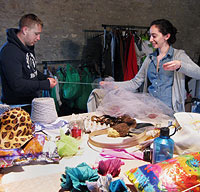 We encourage students to incorporate the Paris research in performance history with the creative practice, articulating, rendering and transforming ideas into concrete inventions. We also want students to acquire life skills: about travel and living in a foreign country, about cultural and artistic exchange, about cooperation with peers, about representing one’s heritage as cultural ambassadors, about expanding one’s own creativity and making room for others’ ideas, and finally, about how to make decisions in complex and unfamiliar situations.
The MADE in France curriculum and pedagogy, by its nature trans-disciplinary (history, art history, dramaturgy, foreign language, creative process, philosophy of arts, performance studies, costume design), promotes an integrated learning experience.
| Washington University students majoring or minoring in dance may apply part or all credit for MADE in France courses toward their major or minor requirements. For more information please see WU dance major/minor requirements |
